

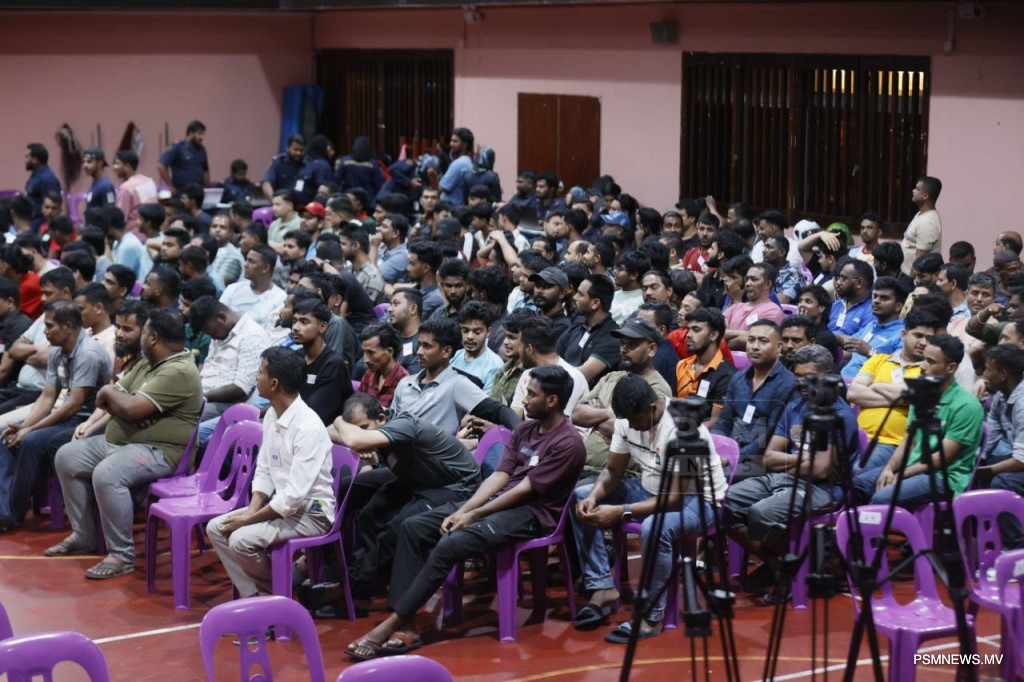
More than 250 foreign nationals found working and conducting business activities illegally in Malé have been taken into immigration custody, under “Operation Kurangi”
The foreign nationals were detained during a special activity carried out in Malé jointly by the relevant authorities. The operation was conducted under the third phase of “Operation Kurangi”, an ongoing initiative aimed at addressing the issue of foreigners living and working illegally in the Maldives. The latest operation specifically targeted foreigners who had failed to provide biometric information.
The operation was conducted jointly by Maldives Immigration, the Maldives Police Service (MPS), the Maldives Food and Drug Authority(MFDA), and other relevant agencies.
Carried out between 4:00 pm. and 6:00 pm on Saturday, the operation involved inspections at 639 locations. Two establishments found employing foreign nationals illegally were shut down.
During the operation, task force officers inspected and screened 1,344 foreign nationals. Of those screened, 254 individuals who were found to be residing and working in the country illegally were taken into immigration custody.
Among those detained, 86.2 percent were men, amounting to 219 individuals, while the remaining 13.8 percent, or 35 individuals, were women.
The government has launched efforts to halt businesses operated illegally by foreign nationals and to repatriate those involved to their home countries. Immigration authorities, together with relevant agencies, are also continuing enforcement measures against parties involved in exploiting foreign workers.
Authorities noted that enforcement operations commonly reveal cases where foreign workers possess valid visas but are employed outside the terms of their visa or work permit, including working at unauthorised locations or undertaking jobs other than those approved under their permits.
Immigration authorities further stated that the number of foreigners working under so-called “open visas” in violation of regulations is increasing. According to the authorities, many are earning substantial financial gains through secondary employment, private work, and business activities outside the employment arrangements approved for them.
As a result, Immigration has urged foreign workers, employers, and the general public to act responsibly regarding the issue.