

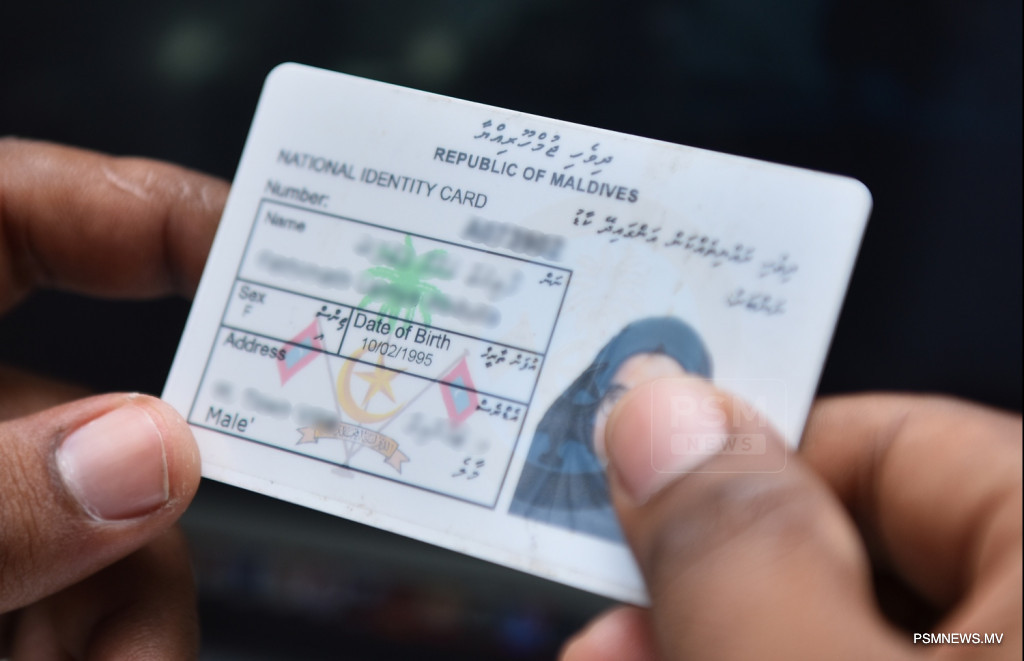
President Dr Mohamed Muizzu has announced that the Maldives plans to introduce a modern "smart ID card" within the next 18 months, allowing citizens to carry out financial transactions and access a wide range of public services using a single card.
The government is pursuing a major digital transformation agenda, including integrating services provided by different state institutions onto a single platform. More than 272,000 Maldivians aged 10 and above are already using the country's digital ID system, representing around 80 per cent of the eligible population.
Speaking on the third episode of PSM News' Nation Chat podcast, President Muizzu said the government was undertaking extensive efforts to digitalise key sectors and public services. As part of this initiative, the existing national identity card system will be upgraded into a digital "smart ID card".
He said the government aims to roll out the new card within the next 18 months. The card will not only serve as proof of identity but will also support financial transactions and provide access to a range of digital services.
"The card will allow people to carry out many different activities. Whether it is obtaining government services or accessing personal records, everything will be possible through the card. It will be a built-in biometric card using fingerprint authentication," the president said.
President Muizzu reiterated the government's goal of expanding the digital economy so that it contributes 15 per cent of the country's economic output by 2030. He said the initiative forms part of his broader vision of transforming the Maldives into a developed nation.
According to the president, once the digital transformation is complete, all government services will be accessible online from anywhere in the country, making them more convenient for citizens.
To achieve this objective, the government has identified three key priorities: establishing a modern digital identity system with strong protection of personal data, creating a secure platform that enables government institutions to exchange information efficiently, and strengthening cyber security to protect digital systems from cyberattacks.
The government said the planned enhancements to the existing eFaas digital identity system are also expected to address many of the concerns currently raised by users while delivering a more secure and efficient digital service.