

Chinese Ambassador to the Maldives Kong Xianhua has said a country’s heritage and culture play an important role in reviving and strengthening its national identity.
Ambassador Kong made the remarks in a social media post following his visit to Utheemu to attend the official National Day activities. He said reviving a country’s heritage and culture is among the most important efforts that can be undertaken to revive and strengthen its national identity.
Referring to renowned Jamaican political activist Marcus Garvey, Ambassador Kong said people who lack knowledge of their history and culture are like a tree without roots. He stressed the importance of passing knowledge of a country’s history on to future generations, saying this would further strengthen patriotism.
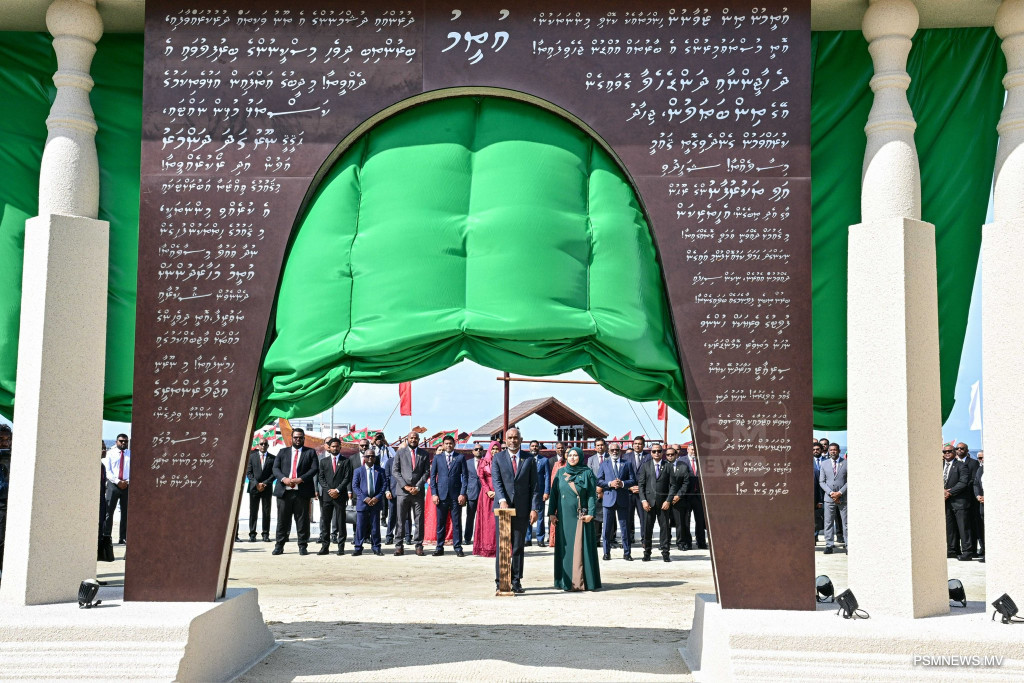
The Ambassador also shared photographs of “Vaahaka Vau”, which tells the story of the historic jihad of national hero Bodu Thakurufaanu, who freed the Maldives from Portuguese subjugation, as well as the Bodu Thakurufaanu Memorial Arch. He described his visit to Utheemu as successful and also extended greetings on the occasion of the Maldives’ National Day.
“Vaahaka Vau” has been developed in the area of Utheemu Kandhuvalu Mosque. Built within the natural woodland adjoining the historic site, it tells the story of Bodu Thakurufaanu’s jihad for independence through boards depicting scenes from the historic jihad, allowing visitors to experience the events associated with it.
As visitors walk along the paths through "Vaahaka Valu", key events from Bodu Thakurufaanu’s national jihad are presented chronologically among the trees. A total of 14 boards featuring historical accounts have been installed at different points along the route.
The “Bodu Thakurufaanu Memorial Arch” is a specially designed structure commemorating the historic jihad led by Al-Sultan Al-Ghazi Muhammad Thakurufaanu Al-Auzam, popularly known as Bodu Thakurufaanu, to free the Maldivian nation from Portuguese subjugation and colonial rule. The structure was designed to symbolise the historic jihad and preserve its memory.
The memorial features six main pillars designed to reflect the architectural style of the Maldives’ ancient mosques.
The Ministry of Heritage has said such sites are expected to encourage visitors to spend more time on the island, sustainably increasing demand for guesthouses, cafés and other establishments providing food and beverage services.
The ministry also said an increase in visitors to the island would create greater opportunities for local guides, historical storytellers, transport service providers and cultural workers to generate income.