

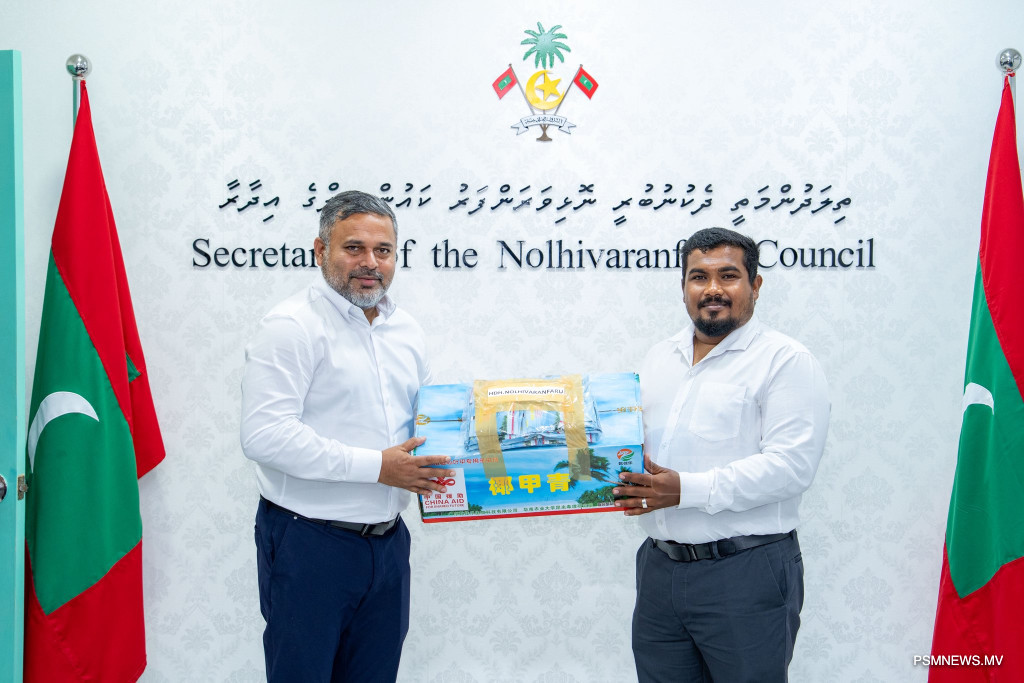
The Ministry of Fisheries, Agriculture and Ocean Resources has said it has supplied pesticides to 38 islands so far to control coconut hispine beetles and spiraling whiteflies.
The coconut hispine beetle was first detected in the Maldives in December 1999 at Sun Island Resort in Ari Atoll. The pest damages young coconut leaves and hinders the growth of coconut palms.
To address the problem, authorities conducted research with assistance from the Government of China and identified an organism capable of controlling the coconut hispine beetle. Authorities have also begun work at the Hanimaadhoo Agriculture Center to establish the Palm Pest Biological Control Parasitoid Rearing Center to breed the organism.
Alongside these biological control efforts, the Ministry has written to island councils asking them to inform the Ministry if they require pesticides to address coconut hispine beetle and spiraling whitefly infestations. So far, 62 islands have requested pesticides, while 38 islands have collected the supplies.
The Ministry said islands in Haa Alifu, Haa Dhaalu and Shaviyani atolls that require pesticides can obtain them from the Hanimaadhoo Agriculture Center. The Ministry will provide pesticides to islands in the remaining atolls.
As coconut hispine beetle and spiraling whitefly infestations increase across different parts of the Maldives, authorities have expressed concern over the issue. Under the President’s guidance, they are giving the work special priority to accelerate efforts to control the pests.
As part of these efforts, authorities recently opened a Palm Pest Biological Control Parasitoid Rearing Center to breed parasitoids that naturally attack such pests. The project aims to identify diseases and harmful pests affecting coconut palms in the Maldives and establish a sustainable system to control them.
The approach involves breeding biological control agents that attack the pests and releasing them in affected areas, allowing authorities to control infestations through environmentally friendly methods. The specialised center will have the capacity to breed more than 100,000 parasitoids a day.