

An investment equal in value to the total accumulated assets created throughout the history of Maldivian tourism will be established through the development planned for Rasmalé, Mohamed Saeed, the Minister of Economic Development, Transport and Trade, announced.
Signed on 21 September between the government and the Abu Dhabi property development firm Eagle Hills, the agreement outlines the construction of a USD 20 billion waterfront and marina project in Rasmalé. The formal announcement drew sharp criticism from political opposition groups, which contended that properties acquired within the development would transfer automatically through inheritance and alleged that sovereign territory was being sold to foreign buyers.
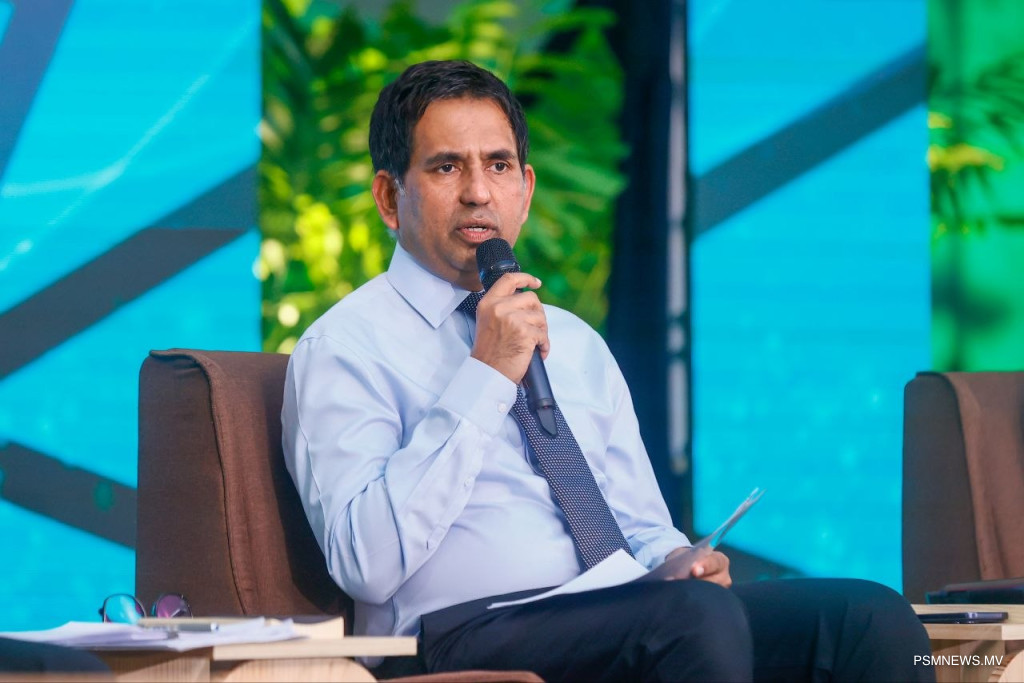
Addressing the eighth session of the 'Ahaa' forum, a public question-and-answer programme organised jointly by the President's Office and Public Service Media, Minister Saeed maintained that elevating the Maldives to fully developed nation status by 2040 requires advancing the national economic framework to an entirely new tier. Securing major foreign capital investments remains vital to attaining that benchmark, Minister Saeed observed, dismissing opposition rhetoric surrounding the Eagle Hills undertaking as a politically driven effort to sow public panic. The successful execution of the mega-project, he argued, would cast a formidable shadow over the political future of opposing factions.
The 170 resort properties currently operating across the island nation generate a direct annual economic inflow of USD 1.7 billion, Minister Saeed reported. Over-reliance on a single commercial sector presents inherent systemic risks to national stability, he cautioned, underscoring that the Eagle Hills venture is designed to diversify state revenues while maintaining strict compatibility with the nation's fragile natural environment.
"No other initiative to date has yielded such a high impact on the Maldivian economy," Minister Saeed asserted. While the tourism asset value does not constitute an exceptionally large commitment when measured against projects in larger nations, he explained, the capital allocation represents an immense investment relative to the scale of the Maldives.
The long-term leasing of state land for commercial hospitality is by no means an unprecedented practice in the country, Minister Saeed pointed out. Between 2013 and 2018, under the previous administration, land reclaimed through capital outlays reaching USD 1 billion was allocated on a freehold basis, granting private ownership over up to 30 per cent of the reclaimed area, he explained. A subsequent administration that assumed office in 2018 enacted legislative revisions authorising public land to be leased for tourism ventures for terms extending up to 99 years, Minister Saeed noted, stating that 54 resort properties have already been allocated under that legal framework, including several that are operational.