

The Government-proposed Diplomatic Missions, Consular Posts and Privileges of International Organisations Bill has been submitted to Parliament, seeking to establish a legal framework governing the privileges of diplomatic missions, consular posts and international organisations in the Maldives.
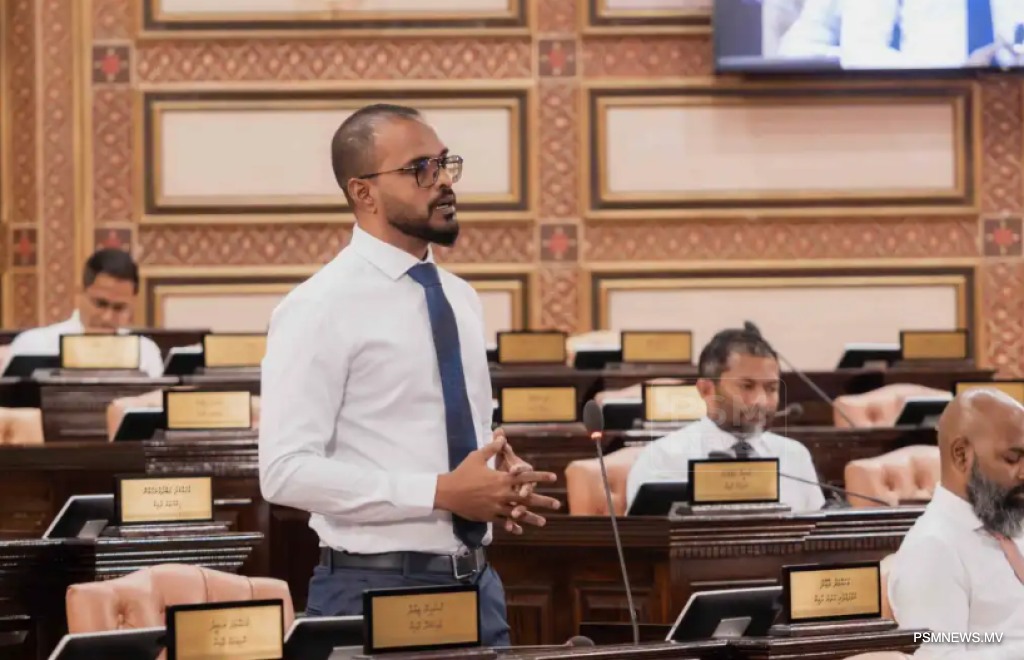
Parliament conducted the bill's first reading during today's sitting. The Government proposed the legislation, with North Kulhudhuffushi Member of Parliament Mohamed Dawoodh serving as its sponsor.
The bill seeks to establish a comprehensive legal framework consistent with international treaties to which the Maldives is a party. It covers diplomatic missions, consular posts, United Nations specialised agencies and other relevant entities, defining the privileges available to them, their scope and the principles and procedures governing how they are granted.
Among its key provisions, the bill addresses the conduct of consular relations, including the functions of consular officers and employees. It also specifies how the legislation interprets their duties and responsibilities.
The proposed legislation further outlines the circumstances in which consular posts, officers, and employees qualify for exemptions from duties and taxes, as well as the circumstances in which these exemptions do not apply.
Under these provisions, consular posts would receive exemptions from taxes and fees on goods imported for their own use. Consular officers and members of their households would also qualify for exemptions on goods imported for personal use when establishing residence in the Maldives, provided the goods are not intended for commercial purposes.
However, consular officers and employees would qualify for these exemptions only on goods imported during the first six months after establishing residence in the Maldives.
The bill also addresses the privileges available to Maldivian nationals working at consular posts. It provides immunity from the jurisdiction of the Maldives for acts performed in an official capacity, although these individuals would remain liable for fees and taxes payable under the law.
Beyond consular posts, the proposed legislation outlines the privileges available to other international organisations and specifies how those privileges should be interpreted.
It also details the privileges applicable to United Nations specialised agencies and other relevant entities under international treaties to which the Maldives is a party, together with the principles and procedures governing their application.