

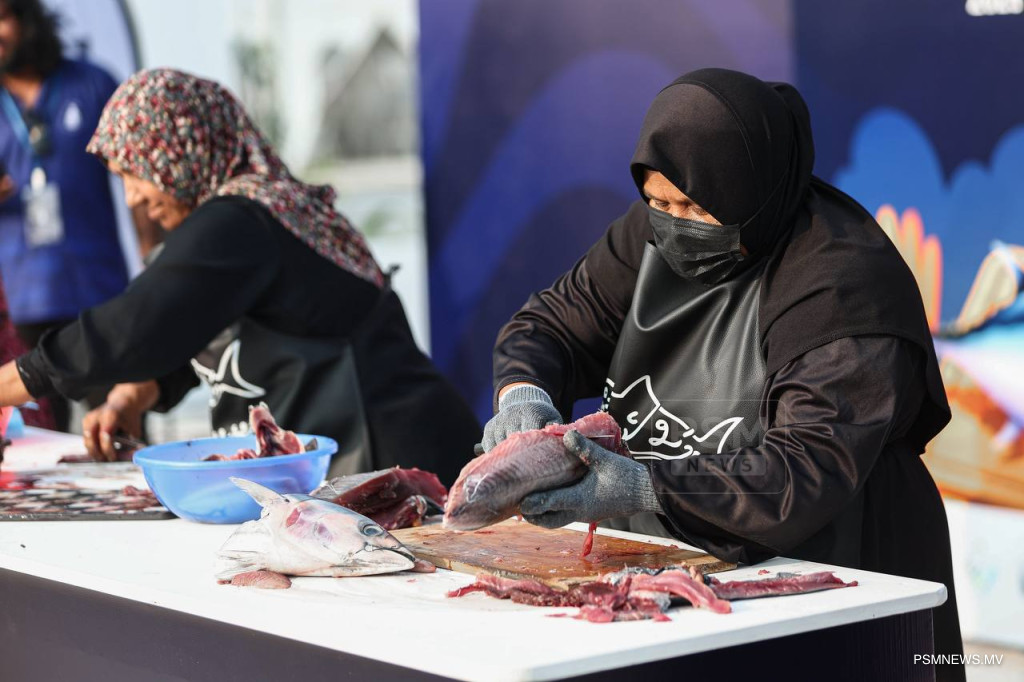
The Ministry of Fisheries and Ocean Resources has trained 139 people in the specialised preparation of value-added fish products, a key milestone in a national strategy to overhaul an economy long defined by raw-export commodities.
The training of 80 women and 59 men follows exploratory assessments to identify optimal production hubs in Kulhudhuffushi City, Kudafari in Noonu Atoll, Ihavandhoo in Haa Alifu Atoll, Nilandhoo in Faafu Atoll, and Kurendhoo in Lhaviyani Atoll. While the Maldives has historically exported the vast majority of its catch as frozen raw fish, the government has established a policy mandate to ensure that future yields consist of processed, higher-yield goods.
Beyond technical instruction, the programme addresses a demographic shift in an industry that was once a cornerstone of female-led labour but has recently become reliant on expatriate workers. By expanding local participation, officials aim to reclaim these economic roles for citizens while elevating the standards of manufactured goods, including canned, pouched, and dried fish.
President Dr Mohamed Muizzu, addressing systemic imbalances in the trade, noted that international corporations frequently purchase raw catch from Maldivian fishers only to capture substantial market profits through overseas processing. Pledging to rectify this disparity, President Muizzu assured the public that his administration remains committed to a framework where these dividends are captured directly by local communities.
To stimulate domestic capability, the president stated the government will foster favourable conditions for corporate investment and establish institutional mechanisms to provide vital financial assistance to the small and medium-sized enterprises tasked with the creation of these fisheries products.