

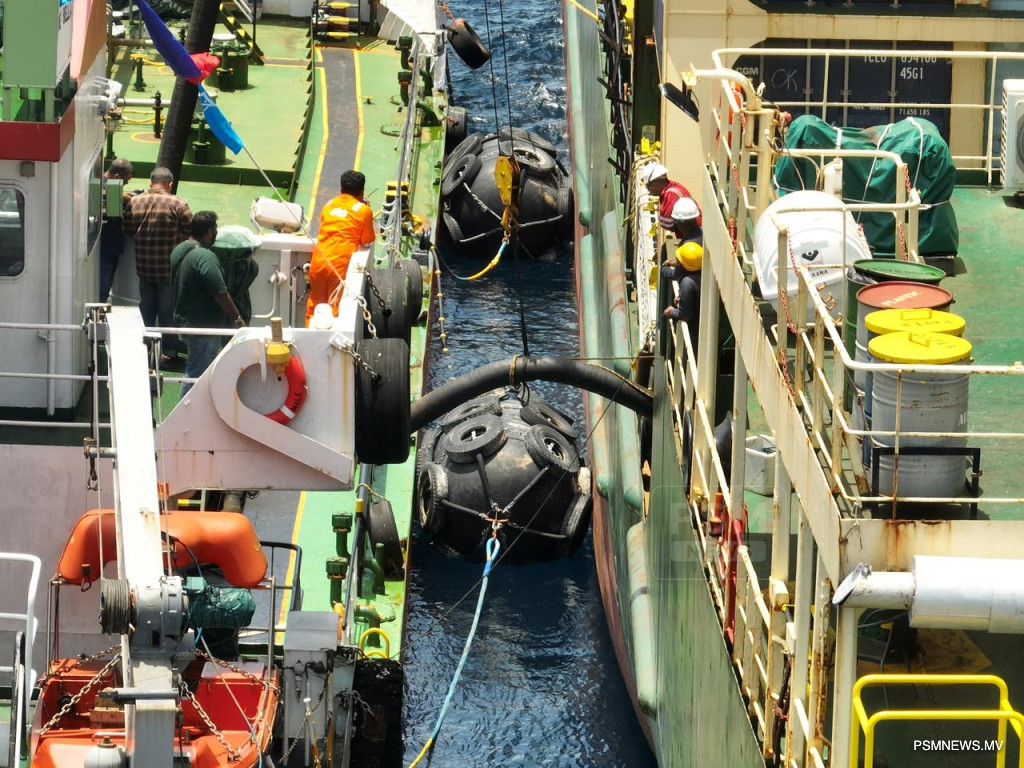
The State Trading Organisation (STO) has identified its fuel business as the most successful segment in its first-quarter report. The company highlighted significant growth in fuel-related operations, particularly through its bunkering services, which have expanded notably during the period.
The government introduced bunkering services as part of efforts to diversify the economy and create additional revenue streams for the Maldives. While authorities acknowledge the service has not yet reached its full potential, financial data shows it is already generating substantial income.
Minister of Economic Development, Transport and Trade, Mohamed Saeed, has previously stated that bunkering services are bringing in considerable revenue. He has also shared updates on earnings at various forums, including a press conference held at the President’s Office earlier this month.
The service was officially launched in September 2024. According to the minister, revenue from bunkering reached USD 47.22 million within the first three months of operation.
STO’s first-quarter report shows total revenue of USD 355.14 million, with the largest contribution coming from the fuel business. This growth is partly driven by rising global oil prices, resulting in a 27 percent increase compared to the previous quarter.
The report also notes that a significant share of this growth comes from bunkering services. Fuel sales through bunkering increased by 18 million litres compared to the last quarter of the previous year.
Monthly revenue from bunkering services continues to rise steadily. A major portion of this income comes from the sale of newly introduced low-sulphur oil.
The service was launched in collaboration with Vitol, an international company experienced in bunkering operations. Expanding this sector and increasing revenue remains a key government priority in strengthening the Maldivian economy.
Currently, bunkering services are conducted offshore. However, the government aims to expand operations further by developing onshore facilities, improving storage capacity, and enhancing service standards to match those offered internationally.