

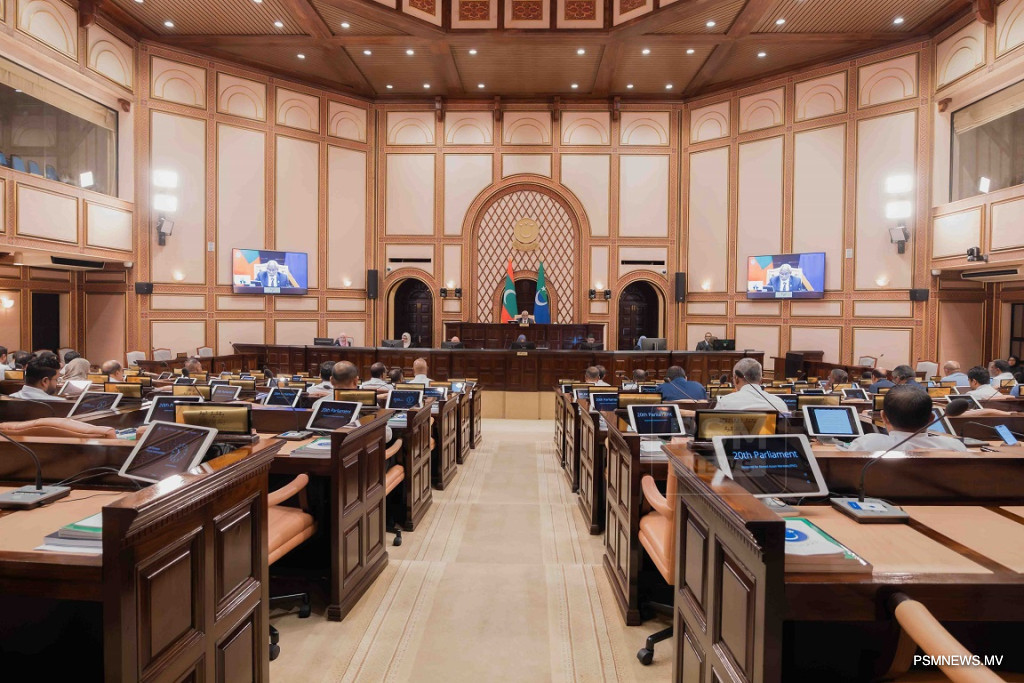
The first session of Parliament for the current year has been extended until 31 May, allowing legislators additional time to complete pending legislative work.
The motion to extend the session received overwhelming support from lawmakers, with 58 members voting in favour while 11 opposed the extension.
The Parliament Speaker announced that the extension was necessary to ensure that important legislation before the Parliament could be properly deliberated and passed. Under the standard parliamentary calendar, the first session would have concluded on 15 May, but the Parliament rules of procedure permit extensions when significant unfinished business remains, provided it gets majority backing of lawmakers.
Pension Reform
Among the major legislation passed just after voting to extend the session was a substantial amendment to the Pensions Act, designed to prevent individuals earning more than the basic pension allocation. The bill, tabled by Milandhoo MP Hassan Mufeed Abdul Qadir on behalf of the government, was passed after consideration by the Parliamentary Independent Institutions Committee, which proposed several amendments to the original text.
The legislation establishes new eligibility criteria for basic pension recipients, specifying that a person cannot receive the basic pension if their income exceeds the threshold set for elderly citizens. Additionally, the bill introduces provisions for early release of pension funds for individuals diagnosed with terminal illnesses, defined medical conditions in which a specialist physician determines that a patient is unlikely to survive more than twelve months despite receiving treatment.
The Pensions Act amendment also contains provisions addressing several practical matters affecting pension beneficiaries. The legislation permits pension funds to be used as collateral for down payments on house purchases, construction, or repairs, allowing individuals to pledge these funds as security for loans obtained from banks or financing companies. Additionally, the bill enables pension holders to reserve Hajj pilgrimage places in advance using their retirement savings.
The new law establishes that the Board of the Pension Office, comprising nine members, will determine the rules and procedures for assessing whether a pensioner exceeds income thresholds or remains eligible for benefits. The bill also stipulates that basic pension recipients will lose their pension if they accept elected constitutional positions or employment with state-owned enterprises or government companies.
The amendment also restructured the Pension Office Board to include a chairperson, senior civil servants from the ministries responsible for public finance and social security, a representative from the employment ministry, and five private sector members. The President will appoint board members excluding the chief executive officer, who will be selected by the board itself. Transitional provisions within the law maintain current board members in their positions while requiring remaining vacancies to be filled within thirty days of the law's commencement, with the CEO to be appointed within sixty days. The amendments to the Pensions Act garnered strong support, passing with 61 votes in favour.
Organ Transplant Bill
Parliament also passed the much-anticipated Organ Transplant Bill, establishing a comprehensive framework for human organ transplantation in the country. The legislation was introduced by the government in October of the previous year and received unanimous approval from the Parliamentary Social Committee before coming before the full Parliament.
The bill sets out comprehensive standards and regulations governing organ transplantation while clearly defining the rights and responsibilities of both service providers and recipients. Under the new legal framework, organ transplants will only be permitted from living donors or live-donor organ transplants, with donation requiring voluntary consent from a mentally sound individual who has attained the age of eighteen years. The legislation explicitly prohibits individuals in state custody or those serving sentences from donating organs.
The legislation establishes two key oversight bodies to administer the new system. A nine-member Organ Transplant Council will be charged with issuing and revoking permits for transplant services while taking enforcement action against those who violate the law's provisions. Additionally, a five-member Organ Transplant Authorisation Committee will be responsible for approving individual organ transplant procedures.
The bill introduces strict criminal penalties for unauthorised organ transplantation, making it an offense to assist in such procedures without proper consent and subjecting both individuals and healthcare providers to fines and imprisonment. The legislation also criminalises the sale or purchase of human organs for transplantation purposes.
The Organ Transplant Bill received overwhelming support from Parliament, passing with 68 votes in favour and requiring only presidential assent to become law.
Local Government Reforms
In other significant legislative action, Parliament approved an amendment to the Decentralization of Administrative Areas Act, transferring employees of the Local Government Authority (LGA) to the civil service.
The government argued that this change would strengthen the management of local government bodies by incorporating their staff into the established civil service structure. The amendment also expanded the mandate of local councils by formally including waste management services among the public services they are required to provide in the Atolls. Previously, the LGA board possessed exclusive authority to appoint and dismiss authority employees, but the new legislation transfers this power to the Civil Service Commission, acting on the advice of the authority's chief executive officer.
The Parliamentary Decentralisation Committee proposed several modifications during its consideration of the bill, including provisions that council allocations would be reduced by any outstanding debts owed to the state for services such as electricity, water, and waste management that remained unpaid for more than six months. The amendment also clarifies that the authority's chief executive officer holds responsibility for appointment, dismissal, and personnel matters, while salaries and allowances for positions within the authority will be determined by the National Pay Commission.
The LGA serves as the oversight body for the activities and operations of local councils under the Decentralisation Act, and the reforms aim to professionalise its workforce while ensuring consistent standards across the public sector.
The amendment passed with 59 votes in favour.