

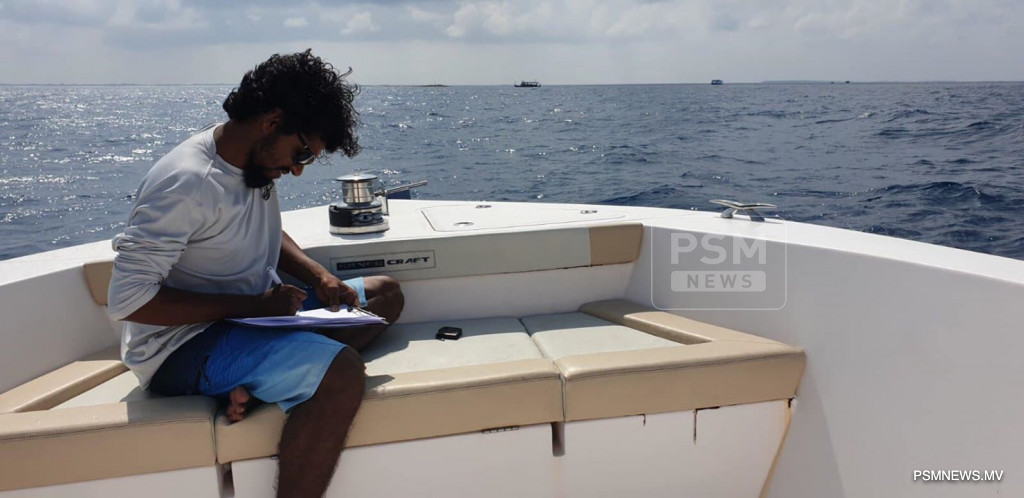
The Minister of Climate Change, Environment and Energy, Ali Shareef, has said the number of rangers working to manage protected areas in the Maldives will be doubled before the end of this year.
Although the Maldives has a large number of protected areas, only a small number of rangers are currently working to manage them. The government has now begun efforts to increase the number of rangers and ensure the protected areas are managed to the desired standard.
Speaking on the Dhivehi Raajjeyge Adu programme “Ahaashey Bunaanan”, Minister Shareef said a total of 11 rangers are currently working across different areas of the Maldives. These include Baa Atoll, SAMPA Protected Area, Farukolhu, Addu City and Fuvahmulah City.
The minister said a ranger training programme has been developed in collaboration with the Maldives National University, and preparations are already under way to launch a new training programme.
He said expanding ranger training to different parts of the Maldives is an important priority for the government. As efforts continue to double the number of rangers before the end of this year, the minister noted that the government is seeking the support of local councils. He added that arrangements are being made to allocate budgets for each council to have a ranger and to provide the necessary training.
“For example, some rangers are already undergoing training in Hithadhoo, Laamu Atoll and Maabaidhoo. A total of 11 rangers are currently working, and a training batch is also under way,” Minister Ali Shareef said.
There are more than 90 protected areas in the Maldives. The Environment Ministry has also said that more rangers are needed to ensure these areas are managed sustainably. As a result, the ministry is working with the Maldives National University to develop rangers, including through a specialised "Basic Rangers Course".
The government is also undertaking specific initiatives to strengthen the management of protected areas and generate economic benefits from them. It has said that once protected areas are managed sustainably and opportunities are created for tourists to experience them, these areas can begin generating revenue.
The government has therefore said it is giving particular priority to efforts aimed at developing the protected areas while ensuring their long-term sustainability.