

Minister of Infrastructure, Housing and Urban Development, Dr Abdulla Muththalib has firmly dismissed claims alleging that properties purchased in the upcoming Rasmale’ mega-development will be automatically inherited or that sovereign land is being sold off to foreign nationals.
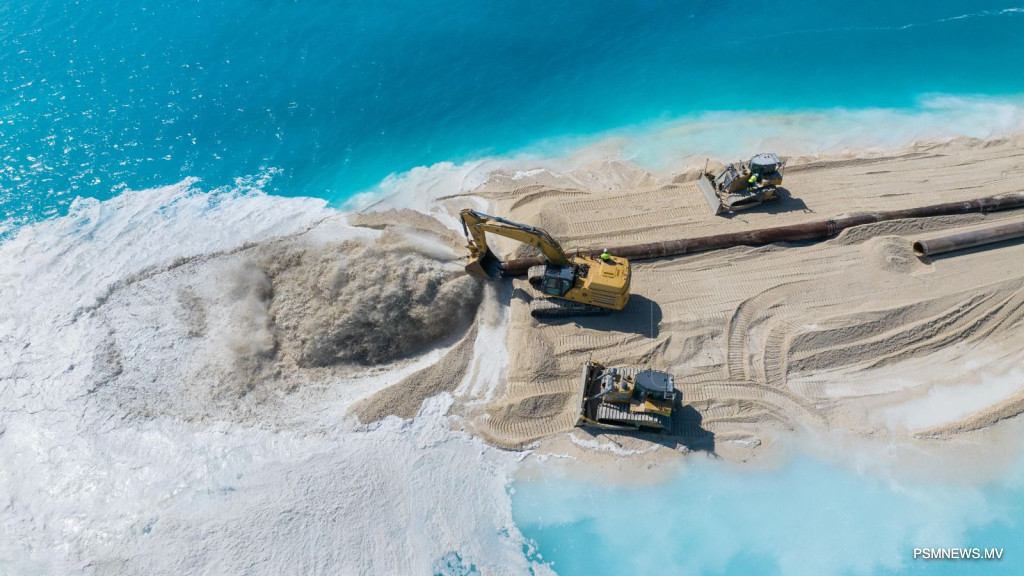
The clarification follows the signing of a landmark agreement on 21 September between the Maldivian government and Abu Dhabi-based developer Eagle Hills to build a USD 20 billion waterfront and marina project in Rasmale’.
In the wake of the announcement, opposition parties leveled criticisms against the initiative, alleging that land was being surrendered to foreigners and that buyers would receive automatic property inheritance and residency rights.
Setting the record straight in a public statement, Minister Muththalib stressed that property ownership rights in Rasmale’ are strictly limited to the specific unit purchased, while the underlying land remains the sole property of the Maldivian State. The Minister explained that if a property is sold or passed on to heirs upon an owner’s death, the transfer can only take place after formal review, government authorisation, and the payment of a designated fee. Consequently, claims of automatic inheritance are factually incorrect. He added that this legal framework aligns with long-standing rules applied to foreign-owned resorts and commercial entities operating across the Maldives.
Minister Muththalib also dispelled rumours surrounding immigration privileges, emphasising that real estate purchases in Rasmale’ will not grant automatic visas to buyers or their families. Visa applications, he noted, will continue to be governed exclusively by Maldives Immigration in accordance with statutory requirements under the Immigration Act.
Reaffirming the nation’s standing, the Minister highlighted that a financially strong and independent Maldives is vital to safeguarding its sovereignty and preventing foreign interference. He stressed that the country requires multi-generational infrastructure projects that deliver long-term prosperity rather than temporary benefits, observing that state enrichment is often resisted by those seeking to exert influence over the nation.
The multi-phased USD 20 billion Rasmale’ initiative marks the largest development project in Maldivian history. It is projected to catalyse over USD 30 billion in total foreign investment, bringing an estimated USD 18 billion in net foreign direct investment directly into the country. Beyond the financial influx, the development is expected to generate over 54,000 direct and indirect job opportunities and attract more than one million additional tourists each year, injecting over USD 2 billion annually into the national tourism sector upon completion.