

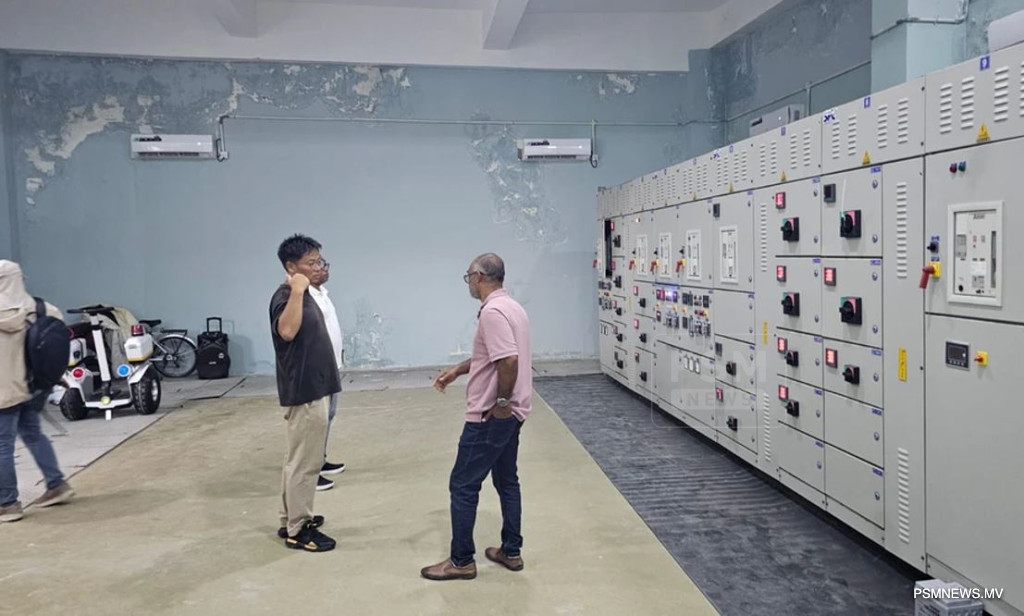
The Government has begun a special survey to identify suitable locations for installing solar PV systems as part of efforts to achieve its target of generating 33 percent of the Maldives’ electricity from renewable energy sources.
The administration of President Dr Mohamed Muizzu has set a target of transitioning 33 percent of the electricity used in the Maldives to clean energy generated from sunlight and other renewable sources by the end of 2028. To accelerate efforts towards this target, the first phase of site surveys to identify locations suitable for solar PV systems has already begun. Survey teams are visiting islands across the atolls and completing the necessary stages of the survey.
The main purpose of the survey is to identify suitable land and locations, including rooftops of buildings, where solar PV systems can be installed across different parts of the Maldives, and to gather the technical information required to implement projects at those sites. This will provide further momentum to efforts to expand renewable energy generation across the country.
Reducing dependence on fuel and generating energy in a sustainable and environmentally friendly manner will bring significant benefits to the Maldivian economy and environment. The Government is taking important steps in coordination with relevant institutions to achieve these targets.
Last August, the Government launched a project to establish solar hybrid systems across 25 islands. Once the project is completed and operational, it is expected to save more than 3 million litres of diesel annually and reduce carbon dioxide emissions by 8,400 metric tonnes.
In addition, work on a 100-megawatt floating solar project being undertaken by an external company began in December.
The Ministry of Economic Development, Trasnport and Trade said the work on the project is expected to be completed in 2027.
The Government’s target is to transition 33 percent of the electricity used in the Maldives to renewable energy by the end of 2028. The Government estimates that this could save USD 42 million annually in fuel expenditure.