

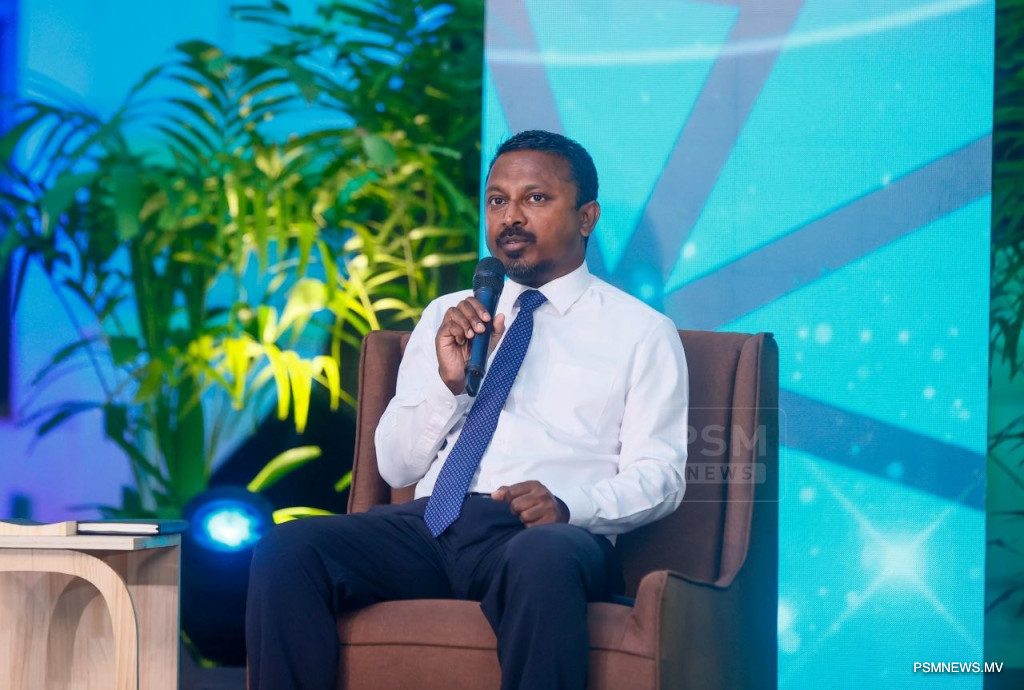
Fees collected from vehicles under the newly enacted Land Transport Act can be used to address traffic problems in Male', Attorney General Ahmed Usham has said.
The Attorney General made the remarks while responding to a question from a member of the public during the eighth edition of the “Ahaa” forum, a platform through which the government responds to public queries concerning the work of various ministries.
The new Land Transport Law, which came into effect last Thursday, contains a specific provision relating to transport in the Malé area. Malé City Mayor Adam Azim has alleged that the provision was introduced to transfer powers currently held by the Male' City Council to the central government.
The Mayor also highlighted amendments under which fees collected from vehicles registered in Malé would no longer be required to be paid to the Malé City Council.
Responding to the issue, Attorney General Usham said the previous Land Transport Acthad been in force for 15 years and that there had been numerous difficulties in amending it.
He said the new law would address many of the traffic-related issues faced by the public.
Attoeny General Usham explained that the primary purpose of collecting vehicle fees is to use the funds to address traffic problems in the area where the vehicle is registered. He noted that Male' is the area most severely affected by traffic congestion.
Although fees collected from vehicles registered in Male' had previously been deposited with the Male' City Council, Usham said the council had not used the funds to address the city’s traffic problems.
Under the new system, Usham said the fees collected from vehicles would be deposited into a dedicated fund. The fund would be managed under the oversight of a Road Safety Council comprising relevant ministers.
He said this would ensure that the funds are used appropriately.
Usham also expressed confidence that, as the Land Transport Act is implemented and its provisions are gradually enforced, the importance of the law and the benefits it provides to the public would become increasingly evident.